The Shared Character: China's Generation-Name Tradition
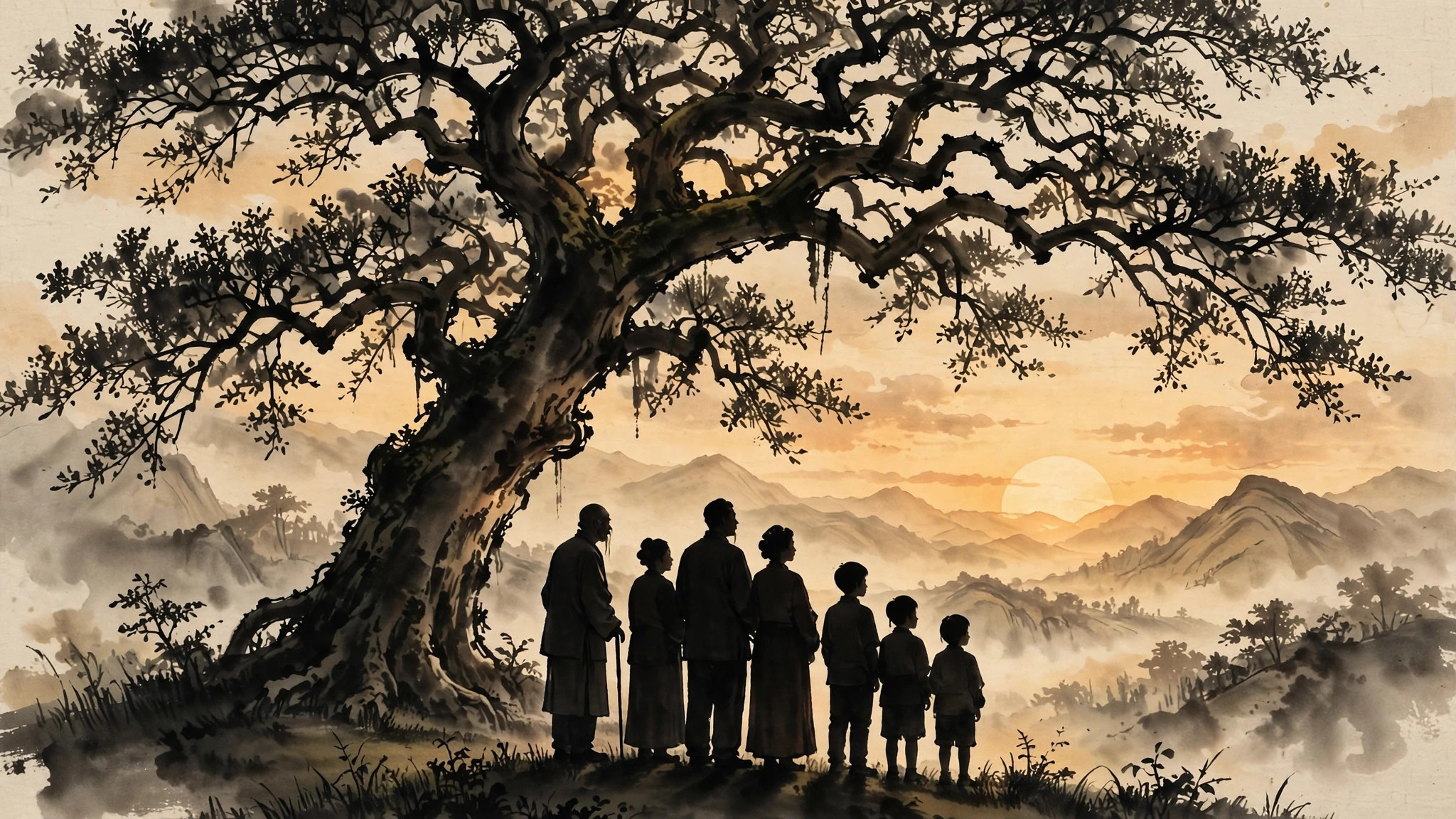
In many Chinese families, siblings and cousins share one character in their given names. Two cousins might be named 建国 and 建军 — different people, same 建. That shared character is called 字辈 (zìbèi), the "generation name," and it quietly tells you exactly where each person stands in the family tree.
What Is a Generation Name?
In this tradition, every generation of a clan is assigned a fixed character. All children of the same generation — brothers, sisters, cousins — carry that character in their given names. Meet a stranger with your generation's character, and you instantly know your relative seniority, even if you've never met.
To keep the system running for centuries, clans wrote generation poems (字辈诗): a verse of 20 to 40 characters, one per generation, composed by an ancestor. Name your children in order down the poem, and the clan's genealogy names itself.
The most famous example belongs to the families of Confucius, Mencius, Yan Hui, and Zengzi. Their shared poem was decreed by Ming dynasty emperors and begins: 希言公彦承,宏闻贞尚衍… Eight centuries later, their descendants still follow it — which is why a Kong family member's generation can be read straight from their name.
Why Did It Exist?
Three reasons, all Confucian at heart:
- Order (长幼有序). The name itself declares seniority — who bows to whom is never in doubt.
- Unity. A shared character marks you as one clan, wherever you wander.
- Record-keeping. Combined with the family genealogy book (家谱), generation names made a thousand years of lineage legible at a glance.
Mao Zedong's 泽, for instance, comes from his family's generation poem — 祖恩贻泽远 — "may ancestral grace bequeath its bounty far." His name was never just personal; it was his generation's verse made flesh.
A Fading — and Returning — Tradition
The tradition weakened in the 20th century: wars scattered clans, genealogy books were lost, and smaller urban families had fewer cousins to coordinate with. Many parents today have never heard of their family's poem.
But it's coming back. Some families are reconstructing lost poems from surviving genealogy books; others simply invent a new one — choosing a character they love and declaring it the next generation's mark. The form survives because the impulse behind it survives: the wish to belong to something longer than a single life.
Learn More About Chinese Naming
Curious how the rest of the system works? Read our guide to Chinese naming traditions, or create a name of your own with our Chinese name converter.
In China, a name can be a private poem — and sometimes, it's a poem the whole family has been writing together for five hundred years.