What Does My Chinese Name Mean? (And How to Find Out)
What Does My Chinese Name Mean? (And How to Find Out)
You have a Chinese name. Someone asks you what it means, and you... hesitate. Maybe your teacher picked it on your first day. Maybe a generator spat it out. Maybe you've been introducing yourself with it for a year and never actually checked.
You're not alone — this is one of the most common questions foreigners ask about their Chinese names. And it's worth answering, because in Chinese culture a name's meaning isn't decoration. It's the first thing people read into you.
A Chinese name has three layers of meaning
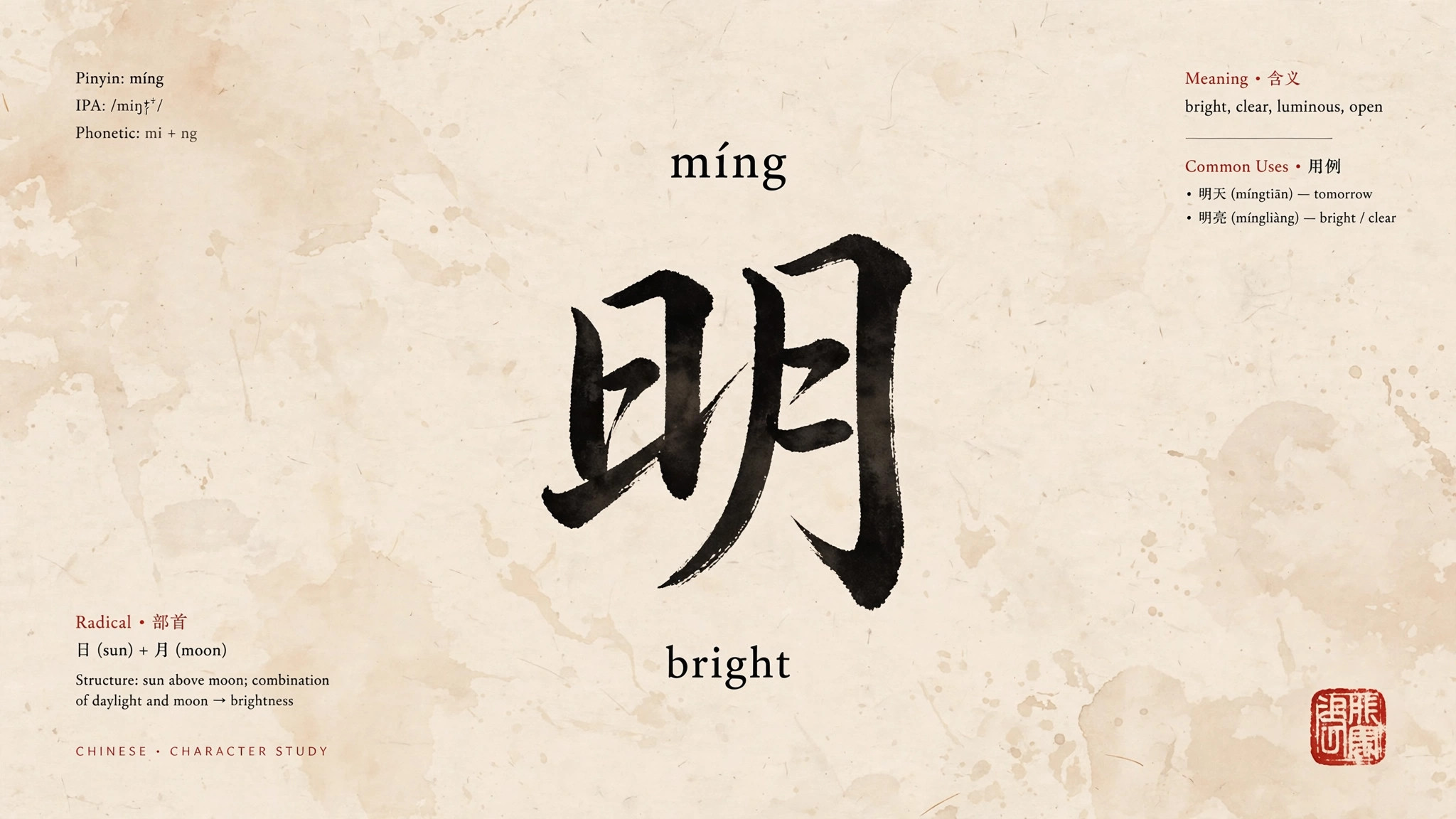
1. What each character means on its own. Every Chinese character carries meaning. 明 means "bright," 美 means "beautiful." This is the dictionary layer — the easiest to look up, and the least informative on its own.
2. What the characters mean together. This is where it gets interesting. Characters combine into phrases, allusions, and vibes that no dictionary entry captures. 子涵 isn't just "child + contain" — it reads as gentle and refined, the kind of name that was everywhere in the 2010s. The combination is the real meaning.
3. What it signals culturally. Names carry era, class, and taste signals. 建国 screams 1950s. A name pulled from classical poetry reads literary. One built from trendy internet characters reads... trendy. Native speakers absorb all of this in about two seconds.
Most people who "don't know what their name means" are missing layers 2 and 3.
Four ways to find out
1. Break it into characters and look each one up. Use Pleco or any Chinese dictionary app. Write down each character's core meanings. This gives you layer 1 — necessary, but not sufficient.
2. Ask a native speaker what it makes them think of. Not "what does it mean" but "what kind of person do you picture?" The answer tells you layers 2 and 3 — the stuff no dictionary has. Ask two or three people. If they all picture the same thing, that's your name's real meaning.
3. Check whether it echoes anything. Search your full name in quotes on Baidu or Google. If it matches a poem line, an idiom — or worse, a meme or a brand — that's part of its meaning now, whether you intended it or not.
4. Run it through a name rater. Our rate-your-Chinese-name tool breaks down each character's meaning and scores the name's cultural fit — naturalness, era feel, homophone risk. It takes about ten seconds, and it catches the things dictionaries miss, like the unfortunate sound-alike nobody warned you about.
What to do with the answer
The meaning is good and it feels like you: done. Use it with confidence — and now you can actually answer when people ask.
The meaning is fine but generic: most names are. 明 ("bright") and 丽 ("beautiful") appear in millions of names. Generic isn't bad — it just means your name won't stand out. If you want more character, that's a reason to pick a new one, not a problem to fix.
The meaning is bad or embarrassing: change it. A character with an unfortunate meaning, a combination that reads as a joke, a homophone that gets laughs — these don't age well. Generate a fresh set and check the meanings before you commit this time. (Our step-by-step guide walks through the whole process.)
The meaning is good but the name still feels off: trust the feeling. Meaning is only one dimension — sound, era, and personal taste matter just as much. A name can mean "bright future" and still not be yours.
The two-minute version
- Look up each character — that's the dictionary meaning.
- Ask a native speaker what kind of person they picture — that's the real meaning.
- Search the full name in quotes — check for poems, idioms, or memes.
- Rate it to catch homophones and era problems no dictionary will show you.
Your name means what its characters say, what the combination suggests, and what Chinese ears hear. Now you know all three — which is more than most people who've carried their name for years.
Additional Details
- Description: Got a Chinese name but never checked what it means? Learn the three layers of a Chinese name's meaning — characters, combination, cultural signals — and four ways to find out yours in minutes.